Copyright: Naturpark Nordeifel e.V.
Discover Schneifel
Between Mining History and Vision
At 697 meters, the Schwarzer Mann is the third-highest point in the Eifel and dominates the ridge of the Schnee-Eifel near the Belgian border. You’ll find an open, forested highland landscape with sweeping views across the Prümer Land all the way to the Ardennes—a peaceful starting point for hikes along the Schneifel ridge.
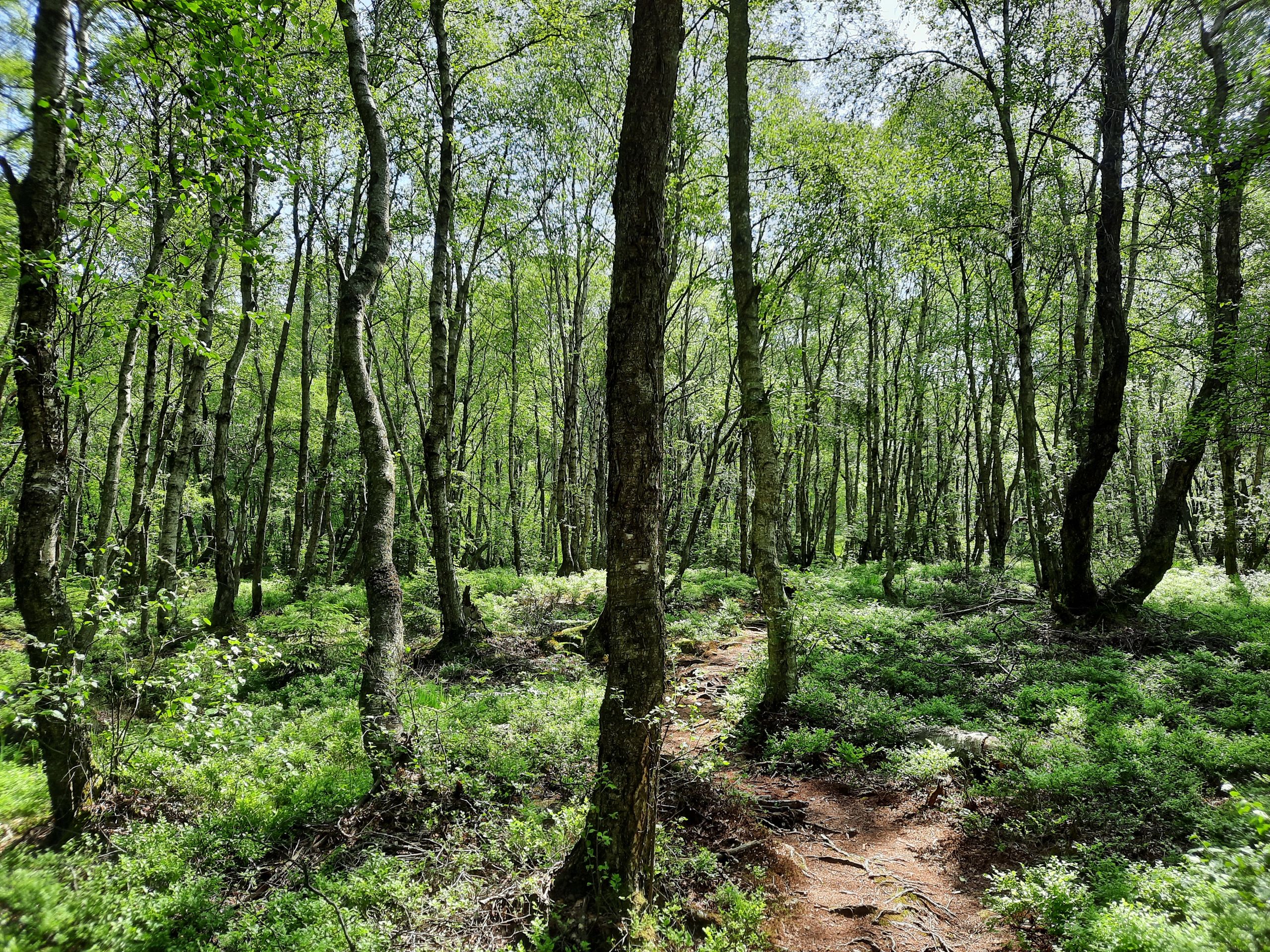
The approximately 15-kilometer-long Schneifel is influenced by the Atlantic climate: it is often cooler, windier, and rainier here than at lower elevations. This creates unique habitats such as raised bogs, like the Rohrvenn. The forests, dominated by spruce—relics of historical reforestation efforts following intensive clearing for the iron industry—now offer refuge to rare species such as the wildcat; the Alfbach stream also originates on the northern slope. The Schnee-Eifel transmitter, built in 1965 and now standing 105 meters tall, dominates the skyline as a technical landmark but is not accessible.
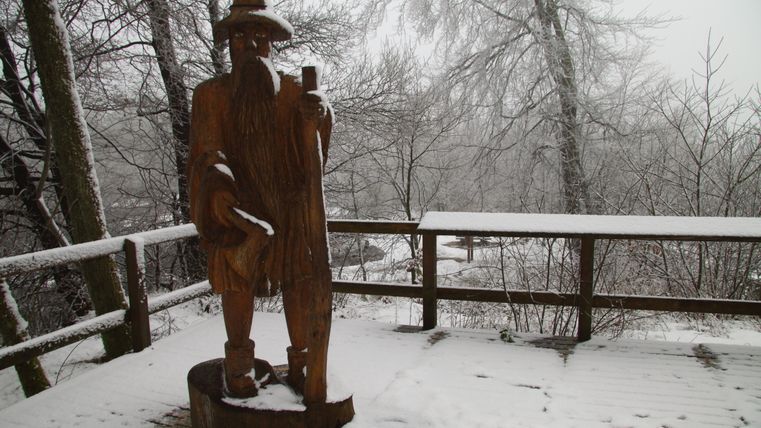
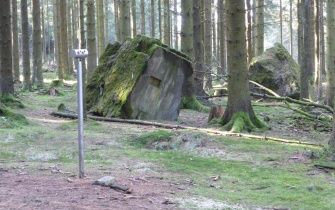
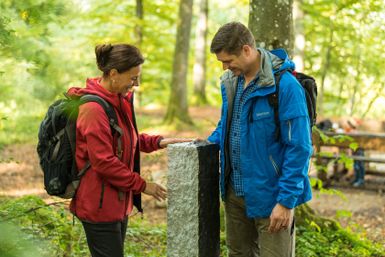
The name “Schwarzer Mann” does not refer to a legendary figure, but to the faces of the miners from Bleialf, blackened by lead ore mining. At the summit, a Tranchot stone commemorates the Napoleonic land survey and adds a quiet cultural-historical touch amidst nature.
Questions about the Bogeyman?
Here you'll find an FAQ to help you plan your visit to the Schwarzer Mann.
The Schneifel region is located in the Western Eifel in the Prümer Land, just a few kilometers from the Belgian border.
To get there, you can easily reach the Schwarzen Mann via the B265 and L20. The Schneifelhöhenweg trail, which is about 10 kilometers long, connects the Schneifelforsthaus with Brandscheid and runs directly along the ridge. Parking is available at hiking parking lots along the road.
The focus is on hiking and enjoying nature. The trails run along the Schneifel ridge and are ideal for long hikes with moderate inclines.
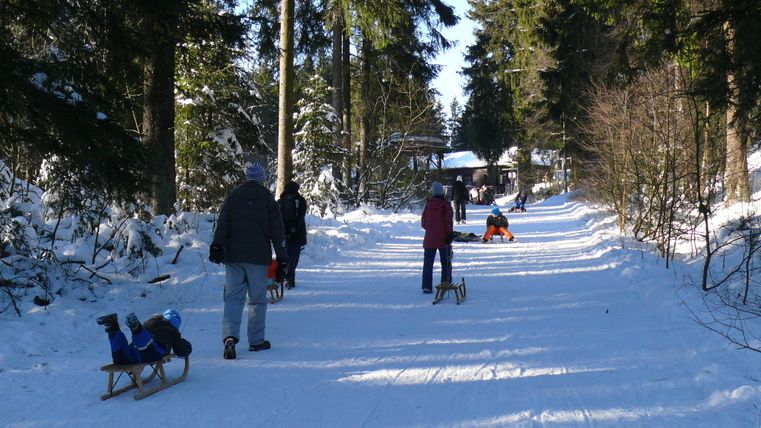
In winter, snow and weather permitting, the area also offers cross-country trails, two 800-meter-long downhill ski runs, and a toboggan run.
Many marked hiking trails lead through the densely forested Schneifel region at the Schwarzen Mann. Several loop trails start at the “Zum Schwarzen Mann” hiking parking lot near the log cabin and are ideal for leisurely half-day or full-day hikes.
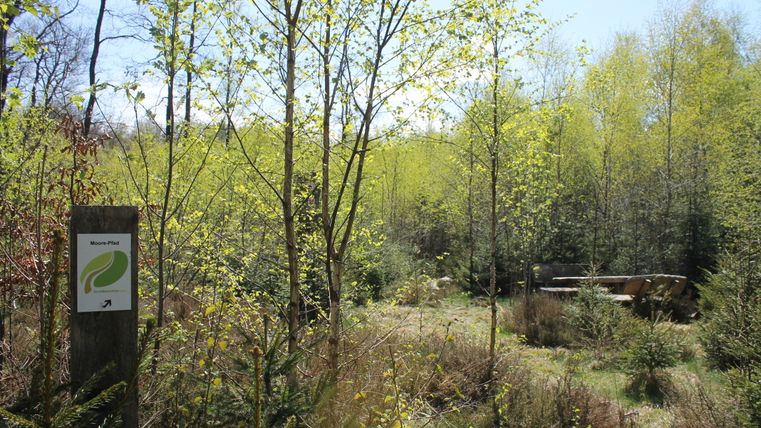
The section of the Schneifel Trail and the Moore-Pfad premium hiking trail are particularly recommended.
The name most likely derives from the historic lead ore mining in nearby Bleialf. The miners’ faces were blackened by ore dust while working underground. This image is still reflected in the place name today. However, the name has nothing to do with the figure of the same name used to scare children.